• Federal
  • DOT · Federal
  • Urine
  • Oral fluid

Cocaine and Drug Tests: What Is Measured, and at What Level

Short answer

A drug test does not look for cocaine. It looks for benzoylecgonine, the metabolite your body produces as it breaks cocaine down. On the DOT urine panel the screen is 150 ng/mL and the confirmation is 100 ng/mL of benzoylecgonine [1]. Because the target is a metabolite rather than the drug itself, a result tells you cocaine was processed by the body — not how much was taken, or when.

Last verified 18 Aug 2026

What matters most

  • The analyte is benzoylecgonine, a cocaine metabolite — not cocaine itself.
  • DOT urine cutoffs are 150 ng/mL screening and 100 ng/mL confirmatory.
  • Cocaine is on every federal panel, including the original five-drug panel.
  • No official source publishes a detection window for cocaine.
  • A screening result above the cutoff is not a positive until a laboratory confirms it.

What the laboratory actually measures

A cocaine test does not target cocaine. It targets benzoylecgonine, the metabolite the body produces as it breaks cocaine down. On the DOT urine panel the initial immunoassay screen is set at 150 ng/mL of benzoylecgonine, and the confirmatory test at 100 ng/mL Source 1eCFR49 CFR §40.85 (current text) — checked 17 Aug 2026.

Two numbers exist because two different techniques are answering two different questions. A sample above the screening cutoff is not a positive — it is a sample that now has to be confirmed by a second, more specific method Source 3eCFR49 CFR Part 40 — Procedures for Transportation Workplace Drug and Alcohol Testing Programs — checked 17 Aug 2026.

Where cocaine sits on the panels

Cocaine is on every federal panel. It was part of the original five-drug panel and it remains in both the DOT panel Source 1eCFR49 CFR §40.85 (current text) — checked 17 Aug 2026 and the HHS authorised panels for federal workplace testing Source 2HHSMandatory Guidelines for Federal Workplace Drug Testing Programs — Authorized Testing Panels — checked 17 Aug 2026. There is no federal programme that tests for drugs but leaves cocaine off.

Why we do not publish a detection window

Official sources set cutoffs, not durations. Neither DOT nor HHS publishes how long benzoylecgonine stays above a cutoff, because it depends on the individual, the dose, the pattern of use and the specimen. Any single number you see quoted has come from someone other than the agency that writes the rule.

The honest answer to “how long will it show” is that the cutoff is knowable and the timeline is not.

If a cocaine result is confirmed

A confirmed laboratory result goes to a medical review officer, whose job is to consider whether there is a legitimate medical explanation before the result is verified Source 3eCFR49 CFR Part 40 — Procedures for Transportation Workplace Drug and Alcohol Testing Programs — checked 17 Aug 2026. If you have any documented medical explanation, the verification interview is where it belongs, with the documentation in hand.

Federal (DOT): a verified positive removes you from safety-sensitive functions and starts the return-to-duty process.

Home tests and cocaine

Home cocaine tests are screening devices. The FDA's guidance on drugs-of-abuse home tests is that a preliminary positive needs laboratory confirmation before it means anything Source 4FDADrugs of Abuse Tests — checked 17 Aug 2026Source 5FDADrugs of Abuse Home Use Test — checked 17 Aug 2026. A line on a cassette is the start of a question, not an answer to it.

What this means for you

Two numbers are worth carrying: 150 and 100, the screen and the confirmation, both in nanograms per millilitre of benzoylecgonine [1]. Nearly everything else circulating about cocaine detection times comes from somewhere other than the regulation.

If you are looking at a preliminary positive, the useful next step is the confirmation result, not a search for a timeline.

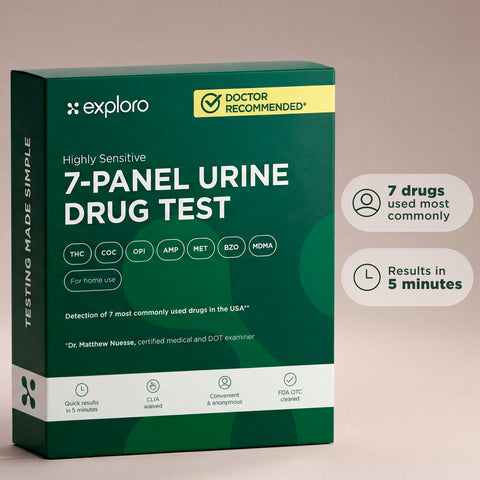
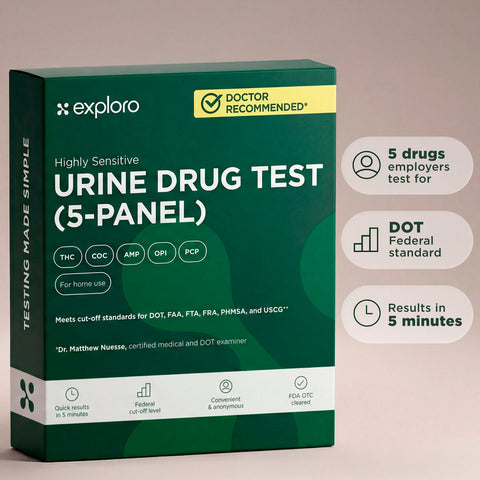
Both the five- and seven-substance home panels include cocaine, though at different cutoffs: the five-panel reads COC at 150 ng/mL and the seven-panel at 300 — worth checking against the cutoff your programme actually uses.

Rules differ by state and employer. This section describes federal requirements. Your state law or your employer’s written policy may add rules on top of them.

When the answer changes

The route to a different outcome is a legitimate medical explanation accepted by the medical review officer at verification [3]. It has to be documented and raised at the interview, not after a result has been verified and reported.

A screening result on its own is not a finding of anything. Dilute, invalid and inconclusive outcomes are handled under separate rules, and none of them is a positive.

Official sources

Every factual claim above is drawn from these sources. Each was opened and checked on the date shown. Where a rule differs between agencies, the source that governs is named in the text.

  1. eCFR · 49 CFR §40.85 (eCFR)

    49 CFR §40.85 (current text)

    Checked 17 Aug 2026
    View official source ↗ (opens in a new tab)
  2. HHS · HHS Mandatory Guidelines (2026)

    Mandatory Guidelines for Federal Workplace Drug Testing Programs — Authorized Testing Panels

    Effective 07 Jul 2025 · Published 13 Mar 2026 · Checked 17 Aug 2026
    View official source ↗ (opens in a new tab)
  3. eCFR · 49 CFR Part 40 (eCFR)

    49 CFR Part 40 — Procedures for Transportation Workplace Drug and Alcohol Testing Programs

    Checked 17 Aug 2026
    View official source ↗ (opens in a new tab)
  4. FDA · FDA — Drugs of abuse tests

    Drugs of Abuse Tests

    Checked 17 Aug 2026
    View official source ↗ (opens in a new tab)
  5. FDA · FDA — Home use tests

    Drugs of Abuse Home Use Test

    Checked 17 Aug 2026
    View official source ↗ (opens in a new tab)

From Exploro

Test for this at home

A home test is a screening step. It tells you whether a substance is above or below that test’s cutoff — not how much, and not what a laboratory would report.

Exploro makes these tests. Star ratings are from Amazon customer reviews and are refreshed periodically; current prices and full instructions are on each product page.