• Federal
  • DOT · Federal
  • Urine
  • Oral fluid

Amphetamines and Methamphetamine on a Drug Test

Short answer

Amphetamine and methamphetamine share one line on the DOT panel at 500 ng/mL screening and 250 ng/mL confirmatory, and MDMA and MDA sit on a separate line with the same two numbers [1]. This is the analyte group where prescriptions matter most: a lawfully prescribed stimulant still produces a laboratory positive, and the person who resolves that is the medical review officer, not the laboratory [2].

Last verified 18 Aug 2026

What matters most

  • Amphetamine and methamphetamine: 500 ng/mL screening, 250 ng/mL confirmatory.
  • MDMA and MDA: the same 500 and 250 cutoffs, on their own panel line.
  • A prescribed stimulant still produces a laboratory positive.
  • The laboratory does not know what you were prescribed, and does not decide.
  • The medical review officer is the step where a prescription is raised.

The numbers on the panel

On the DOT urine panel, amphetamine and methamphetamine share a single line: 500 ng/mL to screen, 250 ng/mL to confirm. MDMA and MDA sit on their own line carrying the same two numbers Source 1eCFR49 CFR §40.85 (current text) — checked 17 Aug 2026.

The same analytes appear in the HHS authorised panels used across federal workplace testing Source 3HHSMandatory Guidelines for Federal Workplace Drug Testing Programs — Authorized Testing Panels — checked 17 Aug 2026, so a federal employee and a regulated driver are measured against the same thresholds.

Prescribed stimulants are the ordinary case here

This is the analyte group where lawful prescriptions and testing collide most often. A prescribed stimulant does not become a different molecule because a doctor prescribed it. The laboratory measures what is in the specimen and reports it against the cutoff.

What resolves it is the medical review officer. Before a laboratory positive becomes a verified positive, the MRO considers whether there is a legitimate medical explanation Source 2eCFR49 CFR Part 40 — Procedures for Transportation Workplace Drug and Alcohol Testing Programs — checked 17 Aug 2026. That is the step where a prescription belongs — with documentation, at the interview, not afterwards.

What the laboratory does not know

The laboratory does not know your name, your medications or your job. It receives a specimen and a code. That separation is deliberate: measuring and interpreting are kept in different hands Source 2eCFR49 CFR Part 40 — Procedures for Transportation Workplace Drug and Alcohol Testing Programs — checked 17 Aug 2026.

It also means a laboratory positive is not an accusation. It is a measurement waiting for review.

Medication taken for a disability

Where a medication is taken for a disability, what an employer may ask and what it may do with the answer are constrained by the Americans with Disabilities Act, and the EEOC has published guidance on how substance use and treatment interact with those obligations Source 4EEOCSubstance Use and the ADA — checked 17 Aug 2026.

This is one of the places where federal employment law, DOT rules and state law all bear on the same facts and do not give one answer. Treat any single rule you read as partial.

Home tests for amphetamines

Home amphetamine tests are screening devices. A preliminary positive needs laboratory confirmation before it means anything Source 5FDADrugs of Abuse Home Use Test — checked 17 Aug 2026 — and a prescribed stimulant is precisely the situation in which an unconfirmed screen misleads the person holding it.

What this means for you

If you take a prescribed stimulant and a test is coming, the most useful thing you can do is have the documentation ready before anyone asks for it, and raise it at the verification stage rather than arguing with a result after it has been reported [2].

If you run the programme rather than take the test: in a DOT programme the cutoffs are not yours to adjust [1], and the prescription question is not yours to adjudicate. That is the medical review officer's role, and routing it there protects you as much as the employee.

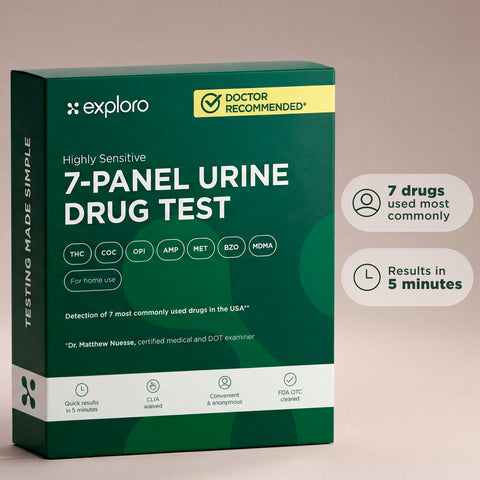
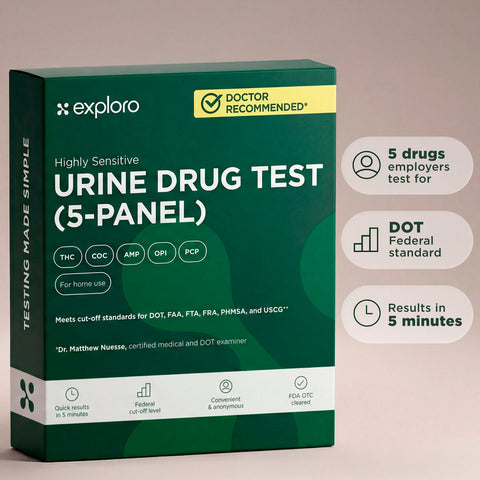
A federal five-panel screens AMP but reports methamphetamine through it; if you want the two read separately at home you need the seven-substance panel, which carries a distinct MET line.

Rules differ by state and employer. This section describes federal requirements. Your state law or your employer’s written policy may add rules on top of them.

When the answer changes

Amphetamine and methamphetamine share a panel line but they are distinct substances with distinct interpretations, and the laboratory reports which one it found. A report of one is not a report of the other.

One rule is deliberately absent from this page. Several secondary sources describe a corroboration requirement for reporting a methamphetamine positive — that amphetamine must also be present at a stated concentration. We have not confirmed the current text and figure in the regulation itself, so it is left out rather than published unverified.

Official sources

Every factual claim above is drawn from these sources. Each was opened and checked on the date shown. Where a rule differs between agencies, the source that governs is named in the text.

  1. eCFR · 49 CFR §40.85 (eCFR)

    49 CFR §40.85 (current text)

    Checked 17 Aug 2026
    View official source ↗ (opens in a new tab)
  2. eCFR · 49 CFR Part 40 (eCFR)

    49 CFR Part 40 — Procedures for Transportation Workplace Drug and Alcohol Testing Programs

    Checked 17 Aug 2026
    View official source ↗ (opens in a new tab)
  3. HHS · HHS Mandatory Guidelines (2026)

    Mandatory Guidelines for Federal Workplace Drug Testing Programs — Authorized Testing Panels

    Effective 07 Jul 2025 · Published 13 Mar 2026 · Checked 17 Aug 2026
    View official source ↗ (opens in a new tab)
  4. EEOC · EEOC — Substance use & the ADA

    Substance Use and the ADA

    Checked 17 Aug 2026 · flagged for re-check
    View official source ↗ (opens in a new tab)
  5. FDA · FDA — Home use tests

    Drugs of Abuse Home Use Test

    Checked 17 Aug 2026
    View official source ↗ (opens in a new tab)

From Exploro

Test for this at home

A home test is a screening step. It tells you whether a substance is above or below that test’s cutoff — not how much, and not what a laboratory would report.

Exploro makes these tests. Star ratings are from Amazon customer reviews and are refreshed periodically; current prices and full instructions are on each product page.