
- Federal
- DOT · Federal
- Urine
- Oral fluid
CBD and Drug Tests: Why CBD Can Still Cost You a Job
Short answer
CBD can make you fail a drug test, but not because anyone tests for CBD. No federal panel includes CBD as an analyte [1][2]. The risk is that CBD products can contain more THC than the label states, and THC is what the test measures. DOT is explicit that CBD use is not a legitimate medical explanation for a laboratory-confirmed marijuana positive [1], so if THC from a CBD product puts you over the cutoff, the positive is legit.
What matters most
- No federal drug testing panel includes CBD as an analyte.
- DOT confirms marijuana in urine at 15 ng/mL of THCA, after a 50 ng/mL screen.
- CBD use is not an accepted medical explanation for a marijuana positive.
- Any product over 0.3% THC remains marijuana, a Schedule I drug.
- The FDA does not certify the THC content of CBD products.
Jump to section
What this means for you
Rules differ by state and employer. This section describes federal requirements. Your state law or your employer’s written policy may add rules on top of them.
When the answer changes
Official sources
Every factual claim above is drawn from these sources. Each was opened and checked on the date shown. Where a rule differs between agencies, the source that governs is named in the text.
-
eCFR · 49 CFR §40.85 (eCFR)
49 CFR §40.85 (current text)
View official source ↗ (opens in a new tab) -
eCFR · 49 CFR Part 40 (eCFR)
49 CFR Part 40 — Procedures for Transportation Workplace Drug and Alcohol Testing Programs
View official source ↗ (opens in a new tab)
From Exploro
Test for this at home
A home test is a screening step. It tells you whether a substance is above or below that test’s cutoff — not how much, and not what a laboratory would report.
-
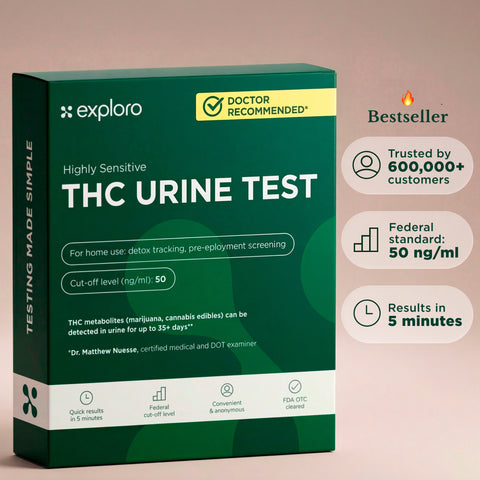 THC Urine Drug Test, 50 ng/mL, 15 StripsReads at 50 ng/mL — the federal screening cutoffThe same cutoff most US workplace urine screens use. Two lines means below the cutoff, one line means above it — and fifteen strips means you can retest as the date gets closer.
$13.49
See details →
THC Urine Drug Test, 50 ng/mL, 15 StripsReads at 50 ng/mL — the federal screening cutoffThe same cutoff most US workplace urine screens use. Two lines means below the cutoff, one line means above it — and fifteen strips means you can retest as the date gets closer.
$13.49
See details →
-
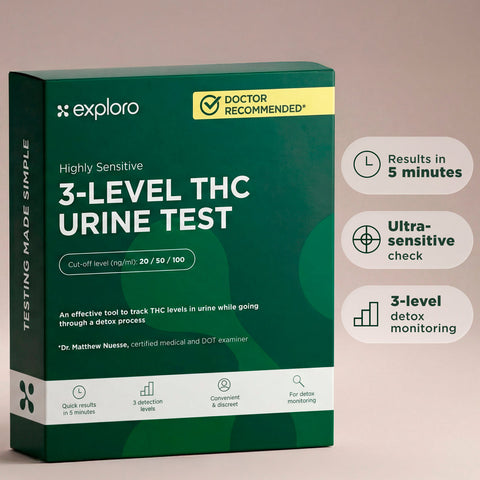 3-Level THC Urine Drug Test, 5 Dip CardsReads at 20, 50 and 100 ng/mLThree cutoff levels on one dip card instead of a single pass-or-fail line, so you can see which way the number is moving rather than only whether you are over it.
$14.99
See details →
3-Level THC Urine Drug Test, 5 Dip CardsReads at 20, 50 and 100 ng/mLThree cutoff levels on one dip card instead of a single pass-or-fail line, so you can see which way the number is moving rather than only whether you are over it.
$14.99
See details →
-
 THC Detox Liver Cleanse, 60 CapsulesNatural ingredients · Doctor-developed · Made in USADoctor-developed formula with natural ingredients designed to support toxin elimination. Made in the USA.
$33.99
See details →
THC Detox Liver Cleanse, 60 CapsulesNatural ingredients · Doctor-developed · Made in USADoctor-developed formula with natural ingredients designed to support toxin elimination. Made in the USA.
$33.99
See details →

Exploro makes these tests. Star ratings are from Amazon customer reviews and are refreshed periodically; current prices and full instructions are on each product page.

