
- Federal
- DOT · Federal
- Urine
- Oral fluid
Opioids on a Drug Test: Which Ones, and at What Cutoffs
Short answer
The federal panel does not test for “opioids” as one thing. It tests named pairs at four different cutoffs: codeine and morphine at 2,000 ng/mL for both screening and confirmation; hydrocodone and hydromorphone at 300 and 100; oxycodone and oxymorphone at 100 and 100; and 6-acetylmorphine, which points specifically at heroin, at 10 and 10 [1]. Fentanyl is not on the DOT panel [1][2].
What matters most
- Codeine and morphine: 2,000 ng/mL screening and confirmatory.
- Hydrocodone and hydromorphone: 300 screening, 100 confirmatory.
- Oxycodone and oxymorphone: 100 screening, 100 confirmatory.
- 6-acetylmorphine, specific to heroin: 10 ng/mL both stages.
- Fentanyl is not on the DOT panel. The proposal to add it has not taken effect.
Jump to section
What this means for you
Rules differ by state and employer. This section describes federal requirements. Your state law or your employer’s written policy may add rules on top of them.
When the answer changes
Official sources
Every factual claim above is drawn from these sources. Each was opened and checked on the date shown. Where a rule differs between agencies, the source that governs is named in the text.
-
eCFR · 49 CFR §40.85 (eCFR)
49 CFR §40.85 (current text)
View official source ↗ (opens in a new tab) -
Federal Register · DOT NPRM — fentanyl (proposed)
NPRM — Addition of Fentanyl to the DOT Testing Panel
View official source ↗ (opens in a new tab) -
eCFR · 49 CFR Part 40 (eCFR)
49 CFR Part 40 — Procedures for Transportation Workplace Drug and Alcohol Testing Programs
View official source ↗ (opens in a new tab) -
EEOC · EEOC — opioids and employees (2020)
Use of Codeine, Oxycodone, and Other Opioids: Information for Employees
View official source ↗ (opens in a new tab) -
HHS · HHS Mandatory Guidelines (2026)
Mandatory Guidelines for Federal Workplace Drug Testing Programs — Authorized Testing Panels
View official source ↗ (opens in a new tab)
From Exploro
Test for this at home
A home test is a screening step. It tells you whether a substance is above or below that test’s cutoff — not how much, and not what a laboratory would report.
-
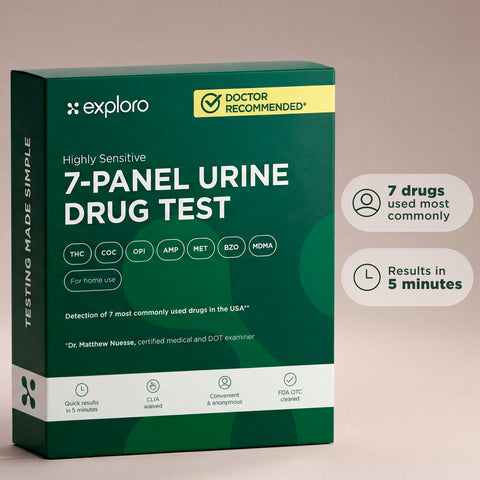 7-Panel Urine Drug Test, 5 Dip-CardsAdds methamphetamine, benzodiazepines and MDMASeven substances on one dip card, including the benzodiazepines and MDMA that a federal five-panel screen leaves out.
$8.99
See details →
7-Panel Urine Drug Test, 5 Dip-CardsAdds methamphetamine, benzodiazepines and MDMASeven substances on one dip card, including the benzodiazepines and MDMA that a federal five-panel screen leaves out.
$8.99
See details →
-
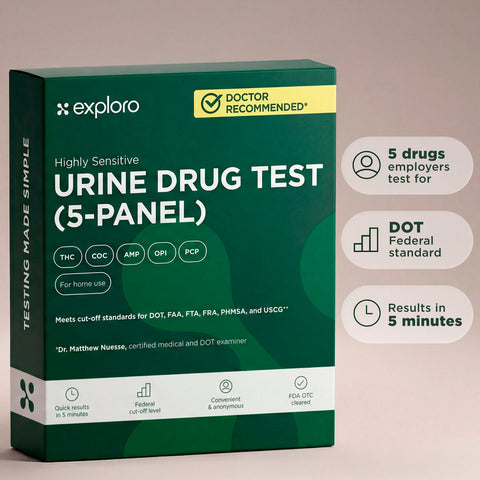 5-Panel Urine Drug Test, 5 Dip-CardsTHC, cocaine, opiates, amphetamines and PCPThe same five substances and cutoff levels used by DOT-regulated testing programmes, read from one dip card. Five cards to a pack.
$7.99
See details →
5-Panel Urine Drug Test, 5 Dip-CardsTHC, cocaine, opiates, amphetamines and PCPThe same five substances and cutoff levels used by DOT-regulated testing programmes, read from one dip card. Five cards to a pack.
$7.99
See details →
Exploro makes these tests. Star ratings are from Amazon customer reviews and are refreshed periodically; current prices and full instructions are on each product page.
